Choosing the Perfect Material for Your Electric Driveway Gate: Steel, Aluminum, Wrought Iron, or Wood?
When you’re planning to install an electric driveway gate, one of the most important decisions you’ll make has nothing to do with automation, keypads, or smart technology. It’s simpler than that – and more fundamental.
What material should your gate be made from?
The material you choose affects everything: how your gate looks, how long it lasts, how much maintenance it requires, and how well it performs in your specific climate. Get it right, and you’ll have a beautiful, durable entrance that serves your property for decades. Get it wrong, and you might find yourself dealing with rust, warping, or constant upkeep far sooner than you expected.
The good news? There’s no single “best” material for everyone. Metal, wood, and composite options each have distinct advantages, and the right choice depends on your priorities, your home’s style, and where you live.
Let’s break down the options so you can make the decision with confidence.
Metal Gates: Strength, Elegance, and Versatility
Metal remains one of the most popular choices for custom driveway gates, and for good reason. It offers exceptional durability, design flexibility, and the ability to create everything from ornate traditional gates to sleek modern entrances.
Wrought Iron: Timeless Elegance with Old-World Character
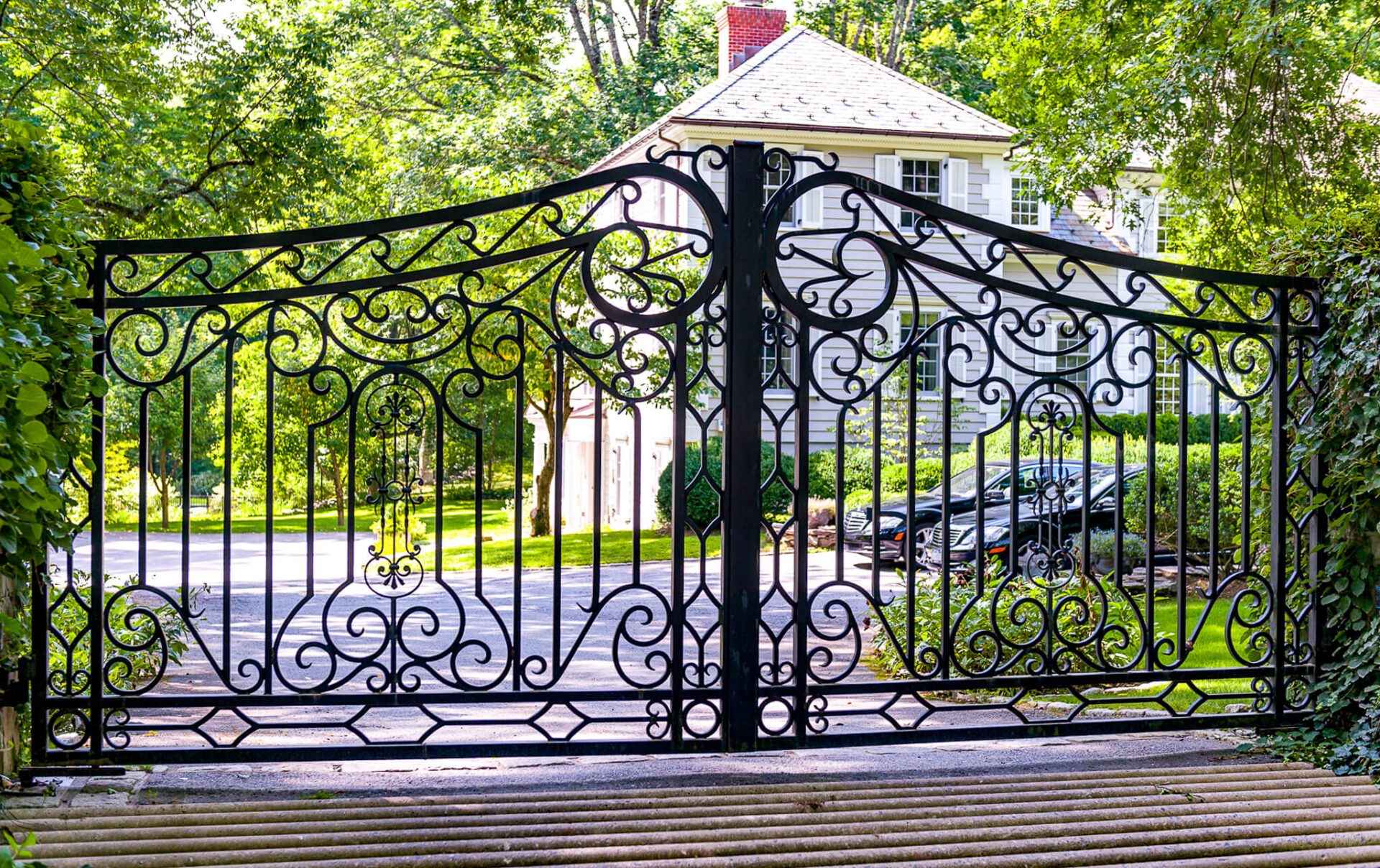
When people picture a classic estate gate, they’re usually imagining wrought iron. There’s a reason this material has been the gold standard for ornamental metalwork for centuries. It’s beautiful, highly customizable, and conveys a sense of permanence that few other materials can match.
Wrought iron gates are all about detail. Scrollwork, finials, decorative rosettes, custom monograms – these are the elements that make wrought iron special. If your property has traditional, Mediterranean, or European-inspired architecture, wrought iron creates visual harmony that feels intentional and elegant.
What makes wrought iron stand out:
- Ornamental versatility, including intricate designs that can’t be replicated in other materials
- Classic, high-end aesthetic that never goes out of style
- Exceptional customization, such as family crests, estate emblems, and hand-forged details
The consideration with wrought iron is maintenance. It requires periodic inspections for rust, especially in humid or coastal environments, and may need repainting or touch-ups every few years. But for homeowners who value traditional craftsmanship and timeless design, that maintenance is a worthwhile investment.
Stainless Steel: Modern Durability Meets Low Maintenance
If you want a gate that’s going to hold up under serious use with minimal fuss, stainless steel is hard to beat. It’s strong, corrosion-resistant, and incredibly low-maintenance.
Stainless steel gates are engineered for strength, which matters more than you might think. A driveway gate isn’t just sitting there looking pretty. It’s opening and closing every single day, often multiple times. It’s handling wind load, supporting automation equipment, and maintaining alignment over years of operation. Stainless steel’s structural integrity means it won’t sag, warp, or lose its shape over time.
Why homeowners choose stainless steel:
- Exceptional strength and corrosion resistance
- Modern, clean aesthetic perfect for contemporary architecture
- Minimal maintenance, typically just occasional washing
- Versatile design options, including laser-cut patterns and custom details
The aesthetic is sleek and refined. Think horizontal slats, geometric patterns, or minimalist frames in matte black, charcoal, or bronze finishes. If your home leans modern or transitional, stainless steel probably fits naturally.
Bronze: Luxury Material with Living Patina
A rarer choice, bronze represents the premium end of metal gate options. It’s a material that literally improves with age, developing a rich patina over time that adds character and depth. For estates, historical properties, or luxury homes where budget allows for the finest materials, bronze delivers unmatched elegance.
Bronze is naturally corrosion-resistant and incredibly durable. It won’t rust, and its warm, golden tones create a sophisticated entrance that stands apart from typical metal gates. Many homeowners appreciate that bronze develops a natural patina – a greenish or brownish surface layer – that tells the story of the gate’s age and adds visual richness.
Bronze advantages:
- Luxury aesthetic with warm, distinctive coloring
- Natural corrosion resistance for coastal and humid climates
- Living finish that develops beautiful patina over time
- Investment-grade material that adds significant prestige
At Tri State Gate, we typically add bronze for details and finishes, rather than a whole gate. But it’s worth noting that bronze is an investment that delivers lasting beauty and distinction.
Aluminum: Lightweight and Coastal-Friendly
If you live near the ocean or in a high-humidity climate, aluminum deserves serious consideration. It’s naturally resistant to corrosion, which makes it the ideal choice for coastal properties where salt air could wreak havoc on other metals.
Aluminum is also remarkably lightweight, which offers practical advantages. It puts less strain on gate motors and hardware, which can extend the life of your automation system and reduce mechanical wear. The lighter weight also makes installation easier and allows for larger gate spans without requiring oversized motor systems.
Why aluminum works well:
- Superior corrosion resistance – perfect for coastal and humid environments
- Lighter weight reduces stress on motors and hinges
- Low maintenance with finishes that hold up well over time
- Design flexibility that can mimic wrought iron or steel aesthetics
Aluminum isn’t as strong as stainless steel, so it’s better suited for decorative or moderate-duty applications rather than heavy, solid-panel designs. But for ornamental gates, picket-style gates, or properties where rust is a concern, aluminum delivers excellent performance without the weight or corrosion issues of heavier metals.
Wood Gates: Warmth, Texture, and Natural Beauty
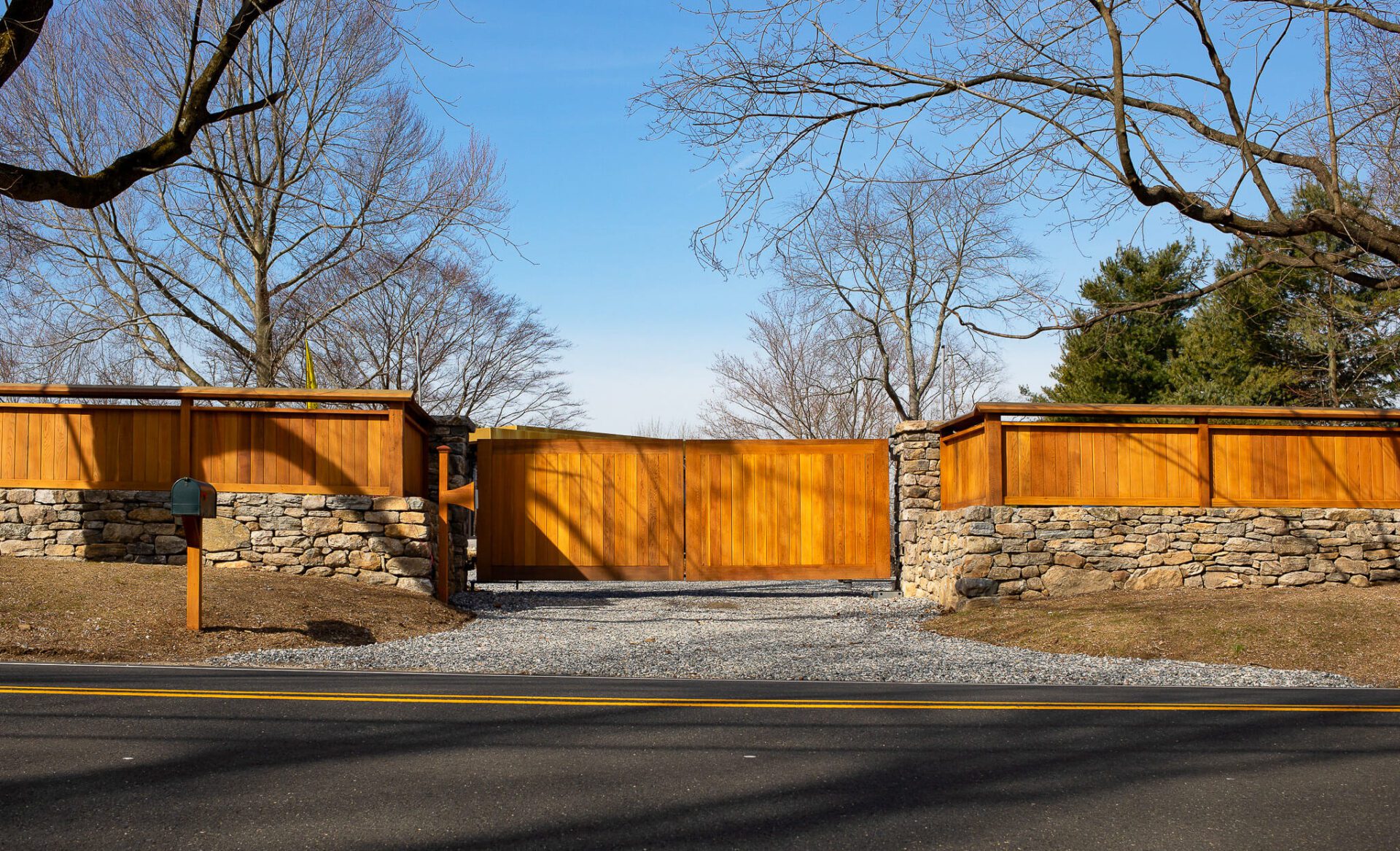
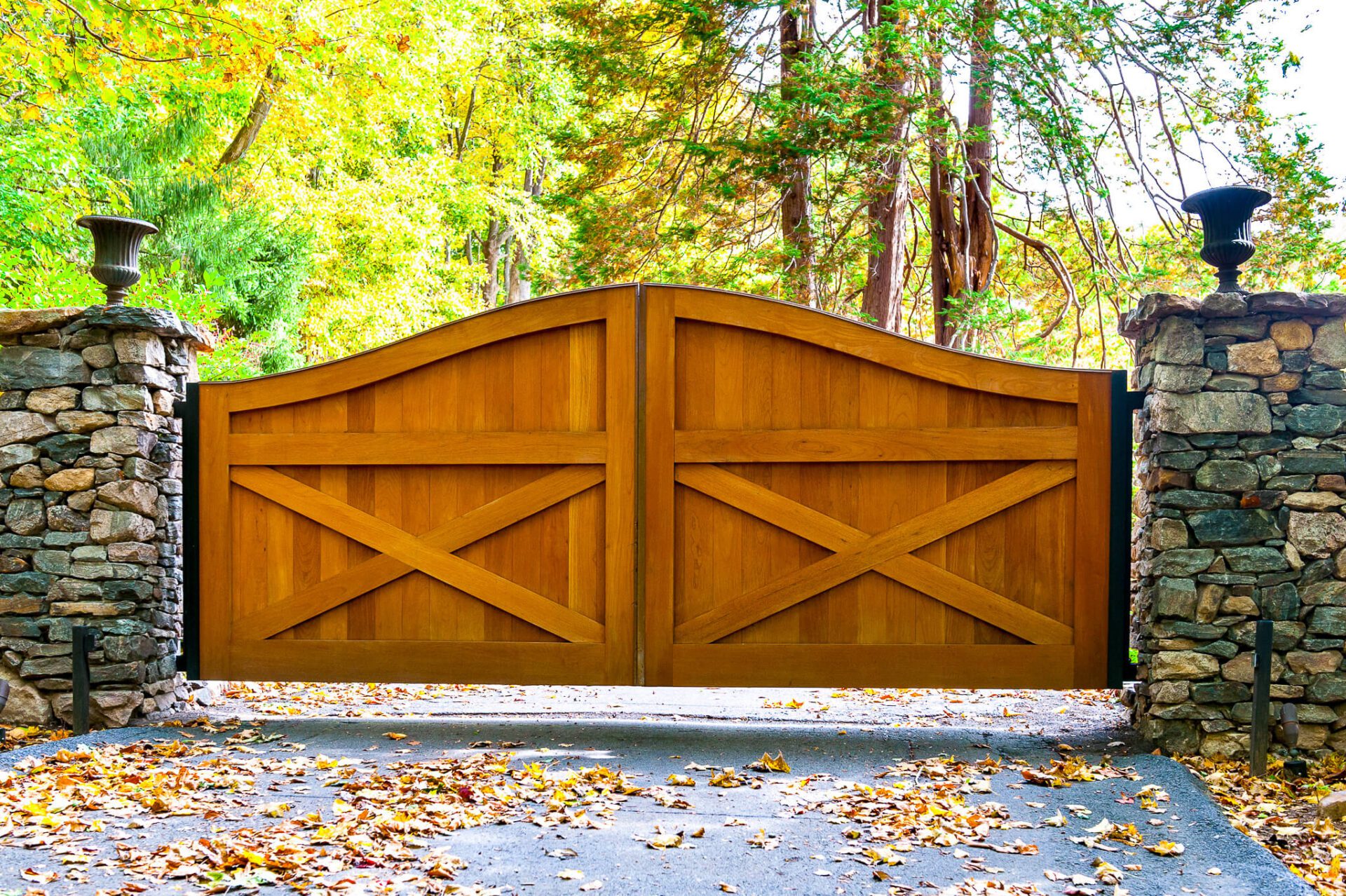
There’s something undeniably appealing about a wooden gate. It brings warmth, organic texture, and a handcrafted quality that metal simply can’t replicate. For rustic estates, farmhouse properties, ranch-style homes, or mountain retreats, wood often feels like the most natural choice.
Western Red Cedar: Natural Resistance and Classic Appeal
Western Red Cedar is one of the finest woods for outdoor applications. It’s naturally resistant to rot, decay, and insect damage thanks to its natural oils, which means it performs better over time than most other wood species without chemical treatment.
Cedar’s warm reddish-brown tones age beautifully, and its relatively lightweight nature makes it easier to automate than denser hardwoods. The natural grain patterns add character, and cedar accepts stains and finishes exceptionally well if you want to customize the color.
Cedar advantages:
- Natural rot and insect resistance
- Beautiful warm tones that age gracefully
- Lightweight compared to hardwoods, easier on automation systems
- Excellent workability for custom designs and details
Cedar does require periodic maintenance (typically refinishing every two to four years depending on climate and UV exposure), but many homeowners find the upkeep worthwhile for the natural beauty it provides.
Mahogany: Premium Hardwood with Rich Character
For homeowners who want the absolute finest wood option, mahogany is the gold standard. It’s a dense, durable hardwood with stunning grain patterns and rich, deep coloring that ranges from reddish-brown to deep chocolate tones.
Mahogany is naturally resistant to warping, shrinking, and swelling – issues that can plague lesser woods in changing climates. Its density also makes it incredibly strong and long-lasting. A well-maintained mahogany gate can serve a property for decades while developing a beautiful aged patina.
Mahogany advantages:
- Exceptional durability and dimensional stability
- Rich, luxurious coloring with stunning grain patterns
- Natural resistance to warping and weather damage
Mahogany requires regular maintenance similar to cedar, including sealing and refinishing to protect against UV and moisture. But its density and natural properties mean it weathers better and maintains its structural integrity longer than softer woods.
Composite Materials: Modern Technology Meets Low Maintenance
Composite gates represent the newest evolution in gate materials. These engineered products combine wood fibers with polymers to create a material that looks like natural wood, but performs more like maintenance-free synthetic materials.
For homeowners who love the aesthetic of wood but don’t want the maintenance commitment, composites offer a compelling middle ground.
Composite advantages:
- Wood-like appearance without the maintenance requirements
- Resistant to rot, insects, and moisture damage
- Dimensional stability – won’t warp, crack, or split
The trade-off? Composites don’t have the same authentic character as real wood. The grain patterns are manufactured rather than natural, and the material doesn’t age or develop patina the way genuine wood or bronze does. Some homeowners also find that composites don’t quite match the warmth and organic feel of cedar or mahogany.
However, for properties in harsh climates or for owners who prioritize convenience, composites deliver the look of wood with significantly reduced upkeep.
Design Customization: Making It Yours
Regardless of which material you choose, custom gates offer remarkable design flexibility. Modern fabrication techniques allow for personalization that makes your gate truly one-of-a-kind.
Popular customization options include:
- Laser-cut patterns and geometric designs
- Family monograms or estate emblems
- Architectural details that echo your home’s design elements
- Custom finishes, stains, patinas, or color matching
- Integrated lighting for visual impact at night
These details transform a functional gate into a signature piece that defines your property’s identity.
The Right Material for Your Property
Choosing your gate material comes down to three questions: What style fits your home? What performance do you need for your climate? And how much maintenance are you comfortable with?
Metal options, including wrought iron, stainless steel, bronze, and aluminum, offer durability, design versatility, and are relatively low maintenance. Wood gates in cedar or mahogany bring natural warmth and rustic character with more upkeep required. Composites provide a low-maintenance alternative with wood-like aesthetics.
There’s no wrong answer – just the right fit for your property, your priorities, and your vision for the entrance you want to create.
Frequently Asked Questions
Which gate material lasts longest in coastal climates?
Aluminum and bronze are the best choices for coastal properties due to their natural corrosion resistance, though stainless steel also performs well in salt air environments.
Can I add custom designs or family crests to metal gates?
Absolutely. Modern laser-cutting technology allows for intricate custom designs, monograms, family crests, and decorative patterns on all metal gate materials including wrought iron, stainless steel, and aluminum.
How often do wood driveway gates need refinishing?
Western Red Cedar and mahogany gates typically need refinishing every two to four years depending on climate and UV exposure, though mahogany’s density often extends that timeline in moderate climates.

Matt Prato is the president of Tri State Gate, and he offers decades of experience in custom gates and access solutions. Having been involved in every aspect of the company from design to fabrication, Matt is a true expert in his craft having worked on countless residential and commercial projects involving custom driveway gates, fences, railings, and other outdoor installations.